All posts by kelseybpena

Unknown's avatar

About kelseybpena

Just a small town Catholic, living in a MUSICAL world! Blogging about random music therapy and Catholic things that can’t get out of my ADHD brain!

“Quiet Hands” strategies

Many students and young children have difficulty with the concept of “quiet hands” or “hands to myself.” Others just have issues with inattention or focusing on the task at hand. Oftentimes, pairing physical movement with re-focusing strategies has a bigger impact than just the simple reminder of “quiet hands,” and putting music to it is even more effective! Here are some of my favorites. Feel free to leave your go-to ideas in the comments!

(To the tune of “Mary Had a Little Lamb”)

Time to wo-rk quietly, quietly, quietly, quietly

Time to wo-rk quietly, listen t-o me (shhhh)

(To the tune of “London Bridge”)

Quiet mouth and quiet hands, quiet hands, quiet hands,

Quiet mouth and quiet hands, I am waiting.

(To the tune of “Twinkle, Twinkle, Little Star”)

Breathing in and breathing out, I am learning not to shout

Others like to be with me, when I’m working quietly

Breathing in and breathing out, I am learning not to shout.

Also, a simple movement-related activity with quietly chanted words may help such as:

My hands upon my head I place, on my shoulders, on my face.

On my hips and at my side, then behind me they will hide.

I will hold them up so high, quickly make my fingers fly.

Hold them out in front of me, swiftly clap them. One, two, three!

Visuals

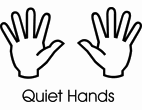
Visuals are also very important when teaching this concept. Simple handprints (such as those in the example photo) are great to initially teach this concept. Shrinking down the handprints over time can help to generalize skills, and smaller handprints are easier to use in multiple places throughout the learning environment to transfer the idea.

Further Ideas and Resources

http://www.preschoolrainbow.org/family-rhymes.htm

Hope these help!

WHAT IS MUSIC THERAPY?

When I give presentations about music therapy, I always love to leave a handout with my participants. There are many great examples of formal handouts from AMTA (American Music Therapy Association) for presentations to various kinds of facilities, advocating for adding music therapy to their programming. But what about presentations to elementary/middle school/high school/college students? Or more informal presentations, such as at career fairs or general interest forums?

Here is the information I include in my handouts when simpler is better.

WHAT IS MUSIC THERAPY?

Music Therapy is an established healthcare profession that uses music to address physical, emotional, cognitive, and social needs of individuals of all ages.  Music therapy improves the quality of life for persons who are well and meets the needs of children and adults with disabilities or illnesses.

~ Music therapy interventions can be designed to:

  • promote wellness
  • manage stress
  • alleviate pain
  • express feelings
  • enhance memory
  • improve communication
  • promote physical rehabilitation.

 ~ Populations Served:

  • Elderly, Developmentally disabled, Mental health, Physically disabled, School-age children, Early childhood, Substance abuse, Sensory impaired, Neurologically impaired, Terminally ill

 ~ Visit www.musictherapy.org or www.swamta.com (or insert your regional association’s website here) to learn more about music therapy


For more information on music therapy, please contact (insert your name here) at (insert your e-mail here) or call (insert your phone number here).

“STOP” and “GO” in Elopement Situations

ELOPEMENT

Here is a great simple example of adding musical support to an environment with students/children who have difficulty with elopement.

Definition: Elopement is when a person leaves an area without permission or notification which usually leads to placing that individual in a potentially dangerous situation.

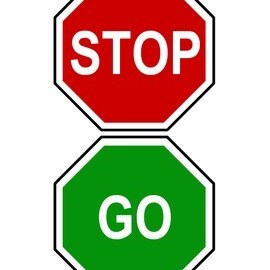
Create 2 visuals – 1 octagonal red visual with the word “STOP” on it, and 1 circular green visual with the word “GO” on it (similar to the featured image, easily found on google images). Make sure these signs are big enough to be easily seen across the room. Laminate them if possible, and attach sticky velcro to the backs of the visuals. Put a strip of smooth velcro on the door of the room in which elopement is usually a problem. Begin singing the “STOP” song while pointing to the corresponding sign on the closed door, blocking the door with your body. Try doing this when entering the room after being in a different place, as well as during times when the child is prone to leaving the classroom, or waiting in line to leave for another activity. Switch out the red stop sign for a green “GO” sign and sing the “GO” song while opening the door and allowing the child to leave.

STOP (to the tune of “The Farmer in the Dell”): 

When I see red I stop. When I see red I stop.

Red means stop so I can wait, when I see red I stop.

When I see red I stop. When I see red I stop.

Red means stop so I can wait – when I see red I stop.

GO (to the tune of “Three Blind Mice”):

Green means go, green means go

The sign is green, that means go

I can exit the classroom,

Follow my teachers and stay real close,

I don’t have to stop or to wait around, cause

Green means go, green means go.

Continue to reinforce these ideas, pairing each time you sing the song with a reinforcer (something the student enjoys, like a small favorite piece of food/candy or a turn holding a favorite toy/item). Reward the student for following these directions or use a pre-existing token system/reward board to help reinforce the concept.

Resources on elopement:

http://www.autism-community.com/what-is-elopement/

http://awaare.nationalautismassociation.org

https://www.autismspeaks.org/site-wide/elopement